
How to Make a Hygiene Visual Schedule for Your Child (An OT's Step-by-Step Guide)
By Ally, Registered Occupational Therapist · October 2, 2026 · 5 min read
If you've ever said "wash your hands" five times in a row, you're not alone. For many kids, especially those with autism, ADHD or developmental delays, everyday hygiene routines have a lot of steps to remember, and spoken reminders disappear the moment they're said.
A visual schedule turns the routine into something your child can see, follow and eventually do on their own. Here's how to make one that actually works.
Why visual schedules help
Visual schedules help kids in a few practical ways:
- They make routines predictable. Seeing what comes next can ease anxiety about transitions and unfamiliar steps.
- They reduce the load on working memory. Instead of holding every step in their head, your child can check the picture.
- They cut down on verbal reminders. You can point to the next step instead of repeating yourself, which often means less frustration for everyone.
- They build independence. Over time, the schedule does the reminding instead of you.
Step 1: Start with one routine
It's tempting to make schedules for everything at once, but start with the routine that causes the most daily friction. For many families, that's handwashing or toothbrushing. Once your child is successful with one routine, it's much easier to add the next.
Step 2: Break the routine into small steps
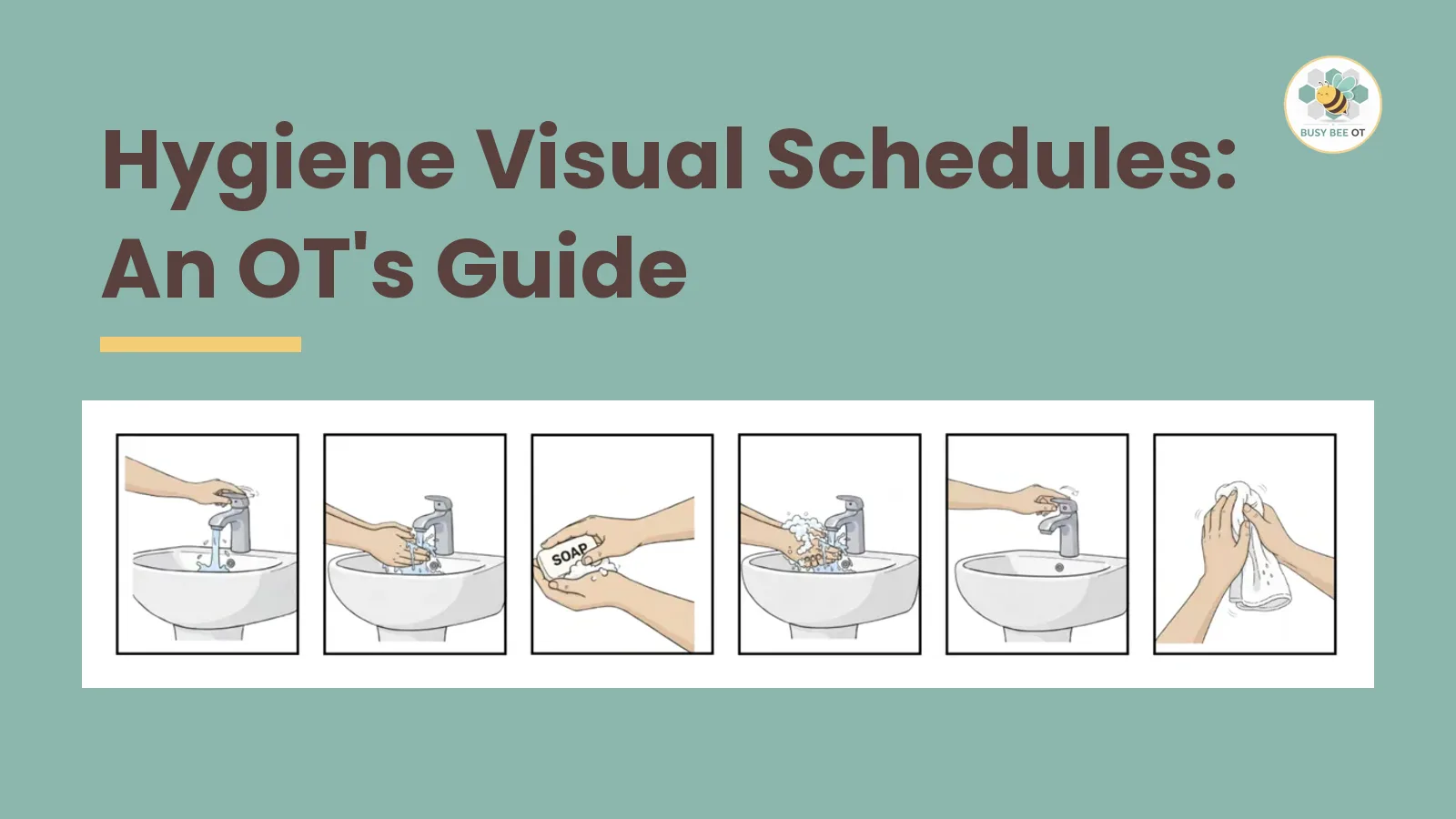
Do the routine yourself, slowly, and notice every action. Then watch your child do it and see where they get stuck. A handwashing routine might look like this:
Handwashing routine
- Turn on the water
- Wet your hands
- Add soap
- Scrub for 20 seconds
- Rinse
- Dry your hands
Aim for about 4 to 6 steps. Too few and the hard parts get skipped. Too many and the schedule becomes overwhelming. If your child struggles with one step, like scrubbing long enough, that step may need extra support, like singing a short song while they scrub.
Step 3: Choose the right format for your child
There's no single right format. Think about how your child learns best:
Unlabelled pictures
Clean visuals with no text, ideal for children who aren't reading yet.
Labelled pictures
A short word or phrase under each picture, helpful for early readers and for building vocabulary.
Numbered steps
Numbers support sequencing and help children understand order.
A long strip
All the steps in one row, great for mounting on a wall or mirror so the whole routine is visible at once.
Pictures should be clear and simple, showing one action per step. Busy illustrations can make it harder for a child to know what to focus on.
Step 4: Put it where the routine happens
A visual schedule only works if your child can see it at the right moment. Place it at your child's eye level, right where the routine happens: beside the sink, on the bathroom mirror or by the bathtub. Printing on cardstock and laminating it (or using a sheet protector) helps it survive splashes.
Step 5: Teach it, then step back
At first, do the routine together:
- Model it. Show your child how you use the schedule by pointing to each picture before doing the step.
- Point, don't tell. When your child gets stuck, point to the picture instead of giving a verbal reminder. This helps them learn to look at the schedule rather than wait for you.
- Celebrate progress. Specific praise works well: "You did all the steps by yourself!"
- Fade your help gradually. As your child becomes more confident, step back a little at a time. Moving from you pointing at every step to your child checking on their own is real progress.
Step 6: Troubleshoot when it's not working
If the schedule isn't helping yet, try these adjustments:
- Too many steps? Combine or remove steps, then add them back later.
- Ignoring the schedule? Move it closer to the action and practise pointing to it together every time.
- Upset by a particular step? Some children find certain parts of hygiene uncomfortable, like the feel of a toothbrush, water on their face or the sound of a hand dryer. This may be a sensory difference, not defiance. Small changes like a softer toothbrush, a warm cloth or a towel instead of a dryer can make a big difference.
- Bored with it? Let your child help choose where the schedule goes or what reward comes at the end of the routine.
When to talk to an occupational therapist
Visual schedules help many children, but they're not a fix for everything. If hygiene routines are causing significant distress, if your child seems very sensitive to touch, sounds or smells, or if progress has stalled despite consistent practice, an occupational therapist can assess what's getting in the way and build a plan around your child's needs.
Get started with a free routine strip
Want to try a visual schedule tonight? Get our free handwashing routine strip below, designed by a registered occupational therapist and ready to print.
When you're ready for more, the Self-Care Routine Cards include 5 essential routines (washing hands, getting dressed, brushing teeth, toileting and bathtime), each in 4 formats: unlabelled, labelled, numbered and long strip.
This guide shares general information and isn't a substitute for an individualized assessment. If you have concerns about your child's development, please talk to a qualified healthcare provider.
Join the Hive
Get a free handwashing routine strip, ready to print.